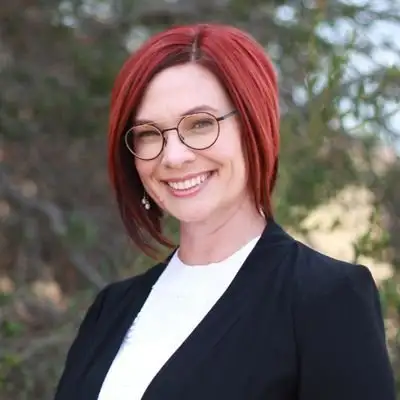
Natalie Werking - Discipleship and Children
Jessie Cruickshank: Well,
welcome to the Ordinary
Discipleship Podcast. I am Jesse
Crickshank, and today I have a
special guest, Natalie Working,
and we are going to talk about
discipling children. So this is
a passion that Natalie has had
for a long time, and we have
been connecting around
discipleship and all of these
things for. Man, I I was sitting
and reflecting this morning,
honey, and it was like maybe 12
years, maybe maybe even a little
longer than that. So your little
ones used to be little, now now
not so little. So I would love
for you to just share who you
are with with my audience, with
the audience here, and you know
what are you what are you
working on? What are you
passionate about, and why you
are excited? I'm gonna guess
you're excited about this
conversation around discipling
children.
Natalie Werking: Yeah, I am so
excited about this conversation
one because so much just respect
for you, Jesse, and your work,
but also just the chance to talk
about it because it is a passion
point of mine. And at one point,
I asked God, like, "Could I do
something else? And He's like,
"Nope, you can keep talking for
kids. Like, use your voice for
children. And so that's what I
keep doing until He tells me to
do something different. But my
story really-I started as a
nursing major. I got a nursing
degree and wanted to do all
sorts of things, and then God
kind of shifted my path, as He
often does, into ministry and
sweat licensed and ordained, and
have served in various
capacities in Next Gen and
missions and kind of compassion
local ministries, and currently
serve with Foursquare Next Gen
and lead a project that is a
grant-funded project that really
focuses on helping parents pass
along their faith to their kids.
This is a it's an important part
of my story. I'm a mom. We have
one kiddo of our own, and then
we're foster parents, and so
we've had 15 other kids live
with us, and so we've gotten to
see what it's like to parent and
disciple different kids at
different ages. So I feel like
I've had all that we have had
all the ages from birth to 18,
actually in our home through
foster care, and so just
passionate about that and God's
call for us to care for orphans
and widows. It's another part of
my heart for this, and I've just
gotten to see different age
groups and different kids of
kind of varying faith. Like we
had an Islamic foster daughter,
and we've had atheist foster
kiddos. And how do we handle
that? And how do we talk to kids
about Jesus and help them along
their journey? So besides that,
also just the research that says
like between the ages of four
and 14 are when most decisions
for Christ that last are made,
and so I just am super
passionate about what are we
doing for kids in those age
brackets from four to 14. There,
everyone's important, everyone
matters, and we want everyone to
know Jesus. But especially
during those crucial that age
gap from four to 14, just really
feel really passionate about
doing a great job reaching and
discipling kids in those age
groups. So yeah, that's a little
bit about me. So excited to get
to be here today.
Jessie Cruickshank: I love it. I
love it. Well, so you know, I
think that most parents want to
pass on their faith. They want
to, but they don't. They don't
want to do that in a way that
either causes harm or that their
kids would reject, like like I
think most parents want to have,
you know, be a for a a force for
good in the formation for their
kids, and and parents choose
different pathways around that.
Like you know, if your kid
doesn't, I know parents who if
their kid doesn't want to go to
church or is fighting them,
they're like, "Oh, I'm. I don't.
I'm not going to force them to
do it because their ability to
make choices here is important
or have agency. I know parents
like my family. The agency that
we had is that there were three
different services that you
could choose from, and you had
to pick from one. So you had
Sunday school, you had regular
church, and then you had
Wednesday nights, and you could
you you could pick, but you had
to go, and and so requirement
for at least once a week was was
that and and there's and there's
a range you know in between
there. What what do you say to
parents who are kind of
wrestling through that question
of how much am I part of this
formation? How much of this
happens apart from me? How much
should I hold space with? How
much should I require? Like,
like, what would you encourage
parents to think about in their
role in the discipleship of
their kids?
Natalie Werking: Yeah, I think
it's important to note that we
are the primary disciplers as
parents. We're the primary
disciplers of a kid's faith, for
good or bad, right? So it's very
hard to overcome the influence
of a parent in a child's faith
development. Truly, so if it's
for good, it's hard for the
world to overcome. If there's a
lack of development, it's really
hard for the church to get
involved in a kid's life later
on. Now, that's not.
Withstanding the power of God
that we know changes lives
radically, that does happen. We
do hear those, but for the most
part, kids will follow the faith
of their parents. And the good
news is, this is actually easier
than we think. And I think we've
complicated it over the years.
What you've written about is
life on life discipleship, not
necessarily programmatic. So the
good news is there's a recent
study by a guy named Christian
Smith, a Notre Dame sociologist.
You can see a lot of his work
where he really measured like
what did create lasting faith in
kids, and did a lot of work, a
longitudinal study that said if
we increase parents' own
devotional life, like parents'
own discipleship, had somewhat
of an impact, 25% impact or
something. If we increase
religious service attendance,
similar to what you're saying,
that the whole family is going
to go to church. What what
impact does that have on faith?
It had significant, maybe 30%
increase. The one that had 66%
increase was when they increased
faith conversations in the home,
and so when you think about
Deuteronomy six, that says,
"Hey, this is the law. This is
the Lord our God is one. Pass
this on. It says, "Talk about
these commandments. Talk about
what we believe when you sit,
when you lie down, when you get
up, when you walk. So, really
taking the pressure off of
families to like, if you can
manage a weekly devotional time,
and you can wrestle your kids to
be at church every time the
doors are open, that's great,
and that's like solid. But
really, what actually makes a
difference in their lives is
open conversations about faith
on a regular basis. So we're
talking more than once a week,
but it doesn't have to be
complicated. It doesn't have to
be deep theology. Like if you
feel like I'm not a theologian,
I don't know how to talk about
these things. That's okay. Talk
about where you saw God today.
You know, walk through the
prayer of examine. Take
something easy. Where'd you see
God today? You have to answer
it. They have to answer it. How
did we show Jesus to our
neighbors today? Those are the
faith conversations that
Scripture instructs us to do,
and luckily, research backs it
up, so it doesn't have to be as
complicated as we think it does.
We just have to do the work to
talk about
Jessie Cruickshank: it. I think,
as a parent, that that would-I
mean-and I'm not a parent. I'm
just like in other people's
lives. I'm-I'm a career auntie.
That would both relieve and
terrify me because you know if I
think about my parents, they
were saved in the Jesus
movement, and my mom had been a
witch before she was in in the
occult before she was a
Christian, and and I had a lot
of questions as a child, and my
and I was like, um, they're
telling me this at church, but
are you sure that drinking's a
sin because the church is saying
that, but then like like David,
like Jesus churned water and
wine, and David danced, and and
and and I saw these
incongruities, and I asked my
parents, and their answer was,
"Go look it up in the Bible, go
ask God about it. Like they
punted. Now now it was
fascinating because each my
brother and my sister and I have
our own relationship with the
Lord, and and we kind of landed
in some fairly distinct theology
streams. But like they were
like, I don't know, go talk to
God. I don't know, you go, you
go inquire with God about that.
So I mean, there were a lot of
conversations, but there weren't
a lot of answers, right? In
that,
Natalie Werking: well, I would
say the strength is the
conversations that kids know
they can ask parents. So there's
probably some great attachment
things that your parents did
when you were young that created
an environment where you could
ask. So how do we do that when
our kids are young, and how do
we then say have the opportunity
for them to ask questions? Just
the fact that you could ask the
question, it doesn't says you
were having a faith
conversation. We don't have to
have the answers. The I don't
know. I wonder. What do you
think about it? What makes you
ask that question? Those still
count. So faith conversations
aren't. We didn't say faith
answers. Oh, I love
Jessie Cruickshank: that. That
that feels like somebody out
there is relieved right now.
Natalie Werking: Yes, yes. You
don't have to have the answers.
We certainly don't, and this is
like literally my job. But I
have keep the conversation
going. Like it's an open
conversation. You can ask me
about your doubts or scripture
that doesn't make sense, or why
did this person say this and do
this. Like an open environment
where kids can ask questions is
what we're after, not where
every question gets answered.
How
Jessie Cruickshank: very
rabbinical,
Natalie Werking: right? Right,
exactly. Like that's the home,
right? The home is the temple.
Yeah, really good.
Jessie Cruickshank: You know,
when I think about the range of
four to 14 that people can come
to faith, like there's some
there's some very different
brain structural differences
between the low end of that and
and the high end of that. I love
talking to kids. Like I love
talking to kids. I love talking
to kids about what they're
thinking. I love hearing from
them when they think about God.
I'm like I love asking them.
Well, what do you think God
thinks about you? And they think
God thinks that they're amazing,
and I mean, I really like kids
have to be taught that God
doesn't like them, which would
probably be a conversation for a
different time. But like, like
they think that God thinks that
they're awesome, and I love
that. I love that. I just so,
but the conversation with a
four-year-old and the
conversation with a 14-year-old
are are quite different. So,
what would you like? Like help
us help us understand some of
those differences there. If if
you're the if you have a young
one or you have a teenager and
you're just about to be
terrified, or you probably like
they're three you're three years
into being terrified of what
they're gonna do. Yeah, what
what should we know? What should
parents know?
Natalie Werking: Well, this is a
lot. We do some even I do some
trainings and I do role play
about how do you talk to a kid
at four and a kid at 14 about
Jesus being in your heart,
right? Because a four year old
with concrete concrete thinking
is like how he's so big. How
does he fit, right? I remember I
was on the radio once, and my
daughter said, "I said, did you
listen to me on the radio? She
goes, "Yeah, but how did you fit
inside there? And pointed to the
speaker at the car, and I was
like, "Oh my gosh! Like she's
four. She doesn't understand
radio waves and how that worked,
right? So when we start to say
like, "Ask Jesus in your heart,
you're like, "That like my heart
will explode. Like that's scary.
That could be scary for a
four-year-old, if we say he's
God is so big, so strong, and so
mighty, right? And then we say
and put him in your heart, and
they're thinking he won't fit.
So how do we? That makes me
Jessie Cruickshank: think of my
little pocket Jesus. I gotta
make I gotta little make a
little pocket Jesus, put him in
my pocket by my heart.
Natalie Werking: I love it. It's
perfect. Those little Jesus can
help us out here, right? Like,
yeah. How do we how do we talk?
How do we shape our language?
And I would say, as a parent,
that this would be like not not
to feel pressured to do this,
but I think for those of us who
are church leaders and who might
be listening, like we have a
responsibility to do the work to
get this right, right? Like, how
can we disciple kids in a way
that's age appropriate, and
Jesse's workbook that is coming
out that's like zero to two and
ages two to six, so incredibly
helpful. So like shameless plug
to use it because I'll send
Jessie Cruickshank: you a bonus
later.
Natalie Werking: Right, that's
so great. She didn't tell me to
say that, but I think the work
that she's done gets us started
on how we are thinking about
these age groups. This is like a
passion point of mine because we
miss it, right? If we're sharing
something that they can't even
apply to them to to where they
are developmentally, so the work
that you've done is is like
critical. And so I don't know if
we want to like walk through the
age groups. Like what you've
done is so beautiful that you
think about you know like babies
and toddlers right and how are
we their parallel play right so
how do we have them beside us
during faith practices and
sacraments right they're not
cooperatively playing yet right
but parallel play they will
mimic and begin to see and so
how do we, as church leaders and
as parents, kind of tap into
their kind of brain development
there, and we do parallel play,
and we we begin they they see
themselves in a mirror, right?
So I always say, like your your
nursery and your toddler rooms
and your at home and at church
need mirrors where we say, look
look who God loves, look who
look who is so loved, and they
see themselves in the mirror,
and they're fascinated by like
that's me, right? Everything is
about them at that stage. So
then, as as we're growing up, I
think there's such great
opportunity for in those
preschool years for really
solidifying like what we believe
in in a way that's age
appropriate, right? But how do
we how do we use the moments
that we have with them to we
call it like it's called Velcro
Velcro habits or habit stacking
in like leadership stuff. But in
family ministry, we we talk
about kind of Velcro habits,
like we're brushing our teeth,
and so when we brush our teeth.
We say a verse that reminds us
of who we are in Christ, right?
Or as you buckle your seatbelt,
right? These little habits that
we're doing every day. How do we
add something onto that? So when
we buckle our seatbelt, we pray
for the world. Like we're
shaping worldview in that
moment. And I think as parents,
those are really easy. Like this
isn't. Oh my gosh! I have so
much to do. How do I add
discipling my kid into this?
These are Velcro habits-moments
you're already doing that we can
Velcro a spiritual practice onto
it, and kids begin to see how
those spiritual disciplines fit
into our lives in a way that's
like seamless. So by the time
they're older, they've been
doing this, like they've been
engaging in prayer, they've been
like meditating on scripture.
That when they brush their
teeth, they've done that since
they were four. This becomes a
normal part of practice, and so
we're discipling them in the
things of God without like
here's the book and turn the
page, and we've now created like
this. Boring interaction with
God that may not engage them,
Jessie Cruickshank: right?
Because because what you're
talking about doing with those
Velcro habits is engaging their
autobiographical memory, and
while their brain is forming,
they are creating an awareness
of God and others and love and
those kinds of things in the
process of them functioning in
their very their very lives, so
it's not it's not an other thing
that we learn later. Or God
isn't a story in a book, right?
Where where they're where it's
it like your daughter was like,
how did you fit in the radio?
Well, how does God fit in the
book? It becomes an ingrained
process that their awareness
will grow with them, yes, and
it's not something they have to
learn. So it's like a language,
right? So if you learn a
language as a kid, then you talk
it all the time and becomes part
of just the wiring, fundamental
wiring in your brain. That's
what that kind of practice will
do through your autobiographical
memory, because your some your
your prefrontal lobe is in form
until you're like 25, so all of
this stuff has to be done
through practice, through
action, through story, through
the regular routine of my life.
I just always thought I was
weird. We taught systematic
theology to kids, or we teach
kids a version of Jesus that has
no complexity to it, and and I
think we miss. I don't know. I'm
I'm just I'm gonna yeah I'm
gonna say something that might
be slightly controversial, but I
think we should have. I had a
picture Bible growing up, so it
was the scripture with like
cartoon, like not cartoon, but
like comic book, and like
Charlton Heston as Moses was on
the front cover, and it didn't
shy away from like like like I
would find the creepy hand write
you know the picture of the
creepy hand writing on the wall
you know during yeah Nick
Tommen. I don't know. It's a
you've been weighed and found
one team. Parson, yeah, we know.
Yeah, yeah, yeah. So like, I
found the creepy ghost stories
in the scriptures. I found like
some Samson and Delilah
destroying the temple, and you
know when we have a version of
scripture for kids, especially
when they're like eight, 910,
that doesn't have that because
it's we've we've we've treated
them like they are four year
olds still. I don't know that
kind of that kind of bothers me.
I learned that God was complex
earlier, and I learned that like
this was a whole history. Like
this was a really really long
story,
Natalie Werking: especially with
Gen Alpha, so the generation of
kids that we have now who are
exposed to so much information
and technology. I mean, truly,
they are capable of
understanding more than previous
generations. Like they, because
they take in so much information
and process it. So their brains,
there's a lot. I mean, you
probably could explain this much
better than I could, but they're
able to understand more complex
things, right? So this is if you
have a grandparent try to help a
third grader with math, they're
like, I didn't do this in third
grade. You're right, right? Kids
are learning more complex things
earlier, and so we have to be
careful that we don't. Yeah,
like you said, we're still
telling the 12-year-old, the
four-year-old Bible story, and
they're like, "What in the
world? Like, what does this have
to do with the world? Because
they're exposed to so much
information and literally the
globe of information, all on
that cell phone or that computer
that they, you know, have every
day at school. So how do we grow
up with them? Grow up our
teaching methods and the way
that we talk about the story of
Scripture, and not just keep it
as like you know the moral
therapeutic deism that we're
teaching four year olds of like
God helps me be strong. And
you're like, well, that's not
really where we are when we're
10, right? Like we, how how do
we do the work as church leaders
to say no? This is actually the
big picture here because this
generation, Gen Alpha, is
capable of understanding more
more complex issues sooner.
Jessie Cruickshank: You talked
about buckling and the Velcro
habits. What a what about that
eight, 910, year old range?
Like, it's interesting for me
that they make meaning of their
identity as I am what I do, and
God is magic because God can do
things that they can't. And
they're like, wait, what? Part
the Red Sea? That's incredible,
you know. And and that and that
that sense of wonder, that sense
of bigness, that sense of their
own agency and the limits of
their own agency, that they're
that they're coming into an
awareness of, and and then
towards the so that phase ends
when we when they start to hit
puberty, which there's a whole
range age range for. But what do
you? What would you encourage
parents of that older eight,
910, year old age range for for
discipleship? What could that
look like in the home?
Natalie Werking: Yeah, two
things. One is the term
anchoring bias. You know this
term, I'm sure, right? So we
want to be sure. So the the
principle here is right. The
first place that you hear
something becomes an anchor, and
you'll filter other information
through that. So when it comes
to conversations about what may
be going on in the world or
differences in beliefs, we want
to be sure that that we as
parents are providing the anchor
for our kids. So we're not
skipping over the tough
conversations, and and it's
okay, like your parents said.
Well, why don't you talk to God
about that? But we also want to
be able to provide a little bit
of an anchor, and it can just be
this is what I think about it.
And and so if a kid asks about
you know the someone they saw at
the grocery store, why does that
person not have shoes or you
know is dressed differently or
whatever that we address it. We
don't go. Oh, don't worry about
that. At eight, we need to be
providing that anchor, maybe
even earlier, to say this is
what we believe as a family, and
and here's and we get to kind of
name the value. You know,
everyone struggles with
something, and that person's
struggling, and they need to
take it to Jesus or something
like that. Like that, we're
naming it, and so that that
becomes the anchor for them
through which they'll filter
future information, right? And
and they may shy away from it,
just like you can get away from
an anchor later in life. But I
think it's really important to
establish that and not not avoid
topics that we think like maybe
they don't pick up on because
kids are so they are they are so
smart. They pick up on it. The
other thing I would say, and I
think you do a great job with
this in your work, Jesse, is
just the power of stories of
real life people living out
their faith. And I have a have a
funny example. This my own my
own kiddo's life. She won't care
if I share this. Where I was
meeting, she we got her a book
about like extraordinary women
of God, right? So it has people,
you know, biblical women, but
just women in today's world,
honestly, who are just living
for Jesus and you know just
doing great things in the world
and for the kingdom. And she'd
read it. I hadn't read it to
her, so I didn't really know. I
mean, I read through it to be
sure it's fine, but I didn't
like read it with her
methodically or anything. She
just read it, and so I, she had
a friend, my my best friend's
daughter wanted to be baptized,
and so I was meeting with her
about water baptism to make sure
she understood and you know the
discipleship moment of like what
are you doing? Why are we doing
this? And my daughter was there,
and I you know we wrapped up
this time, and we're kind of
saying like, okay, this is
great. I think you understand
it. We're so excited for you to
obey Jesus in this way and
whatever. And I said, let's do
it. And my daughter leans back
in her chair and she goes, yeah,
but it's risky. And I said, what
did you say? She goes, yeah, but
it's risky. And she's been
hearing the conversation, and
I'm thinking like, oh, because
she has you know tubes in her
ears. I said oh you're like
worried about you know getting
water in your ears like it's
that's risky to go underwater
without you know your earplugs
in, and you know I said we can
you you can wear earplugs to get
water baptized it's fine. She
goes no it's it's risky because
if you surrender to Jesus you
could end up like Elizabeth
Elliot eating monkey brains in
Ecuador after they kill your
husband, and I was like, okay,
like in her brain, she's 10,
right? So we're saying this 989,
10 age. Like the story, she
applied the story to her life.
Like if I surrender to Jesus,
she was holding out to be water
baptized because she was ready.
Like I'm gonna surrender to
Jesus, and I gotta be ready for
whatever He asks me to do. So I
think the power of stories, kids
connect with them. It's why
Disney movies work or whatever
movies work, right? The power of
story in their life, and we
begin to help them see the the
overarching story of of
Scripture, right? That will be a
powerful, powerful piece of
their discipleship.
Jessie Cruickshank: Yeah, and
that would land just so much
more impactful than like if you
just said, "Hey, if you
surrender your your life to
Jesus, you're you're
surrendering your whole life. I
mean, they can't conceive of
what their whole life like.
Like, what is that? I don't even
know what that means half the
time. But like, I mean, I'm
getting older. It's I'm like,
oh, oh, you mean the rest of my
life? I'm starting like, oh, the
oh the the what's left of it.
You're enhancing your
Natalie Werking: development
now, right? But when you're
Jessie Cruickshank: 10, you
know, like like seeing how
that's played out for other
people and and what that what
that's cost them, what's that
what that has required of them?
Yeah, so much different than to
just read a Bible verse and you
know memorize it at 10. So we
were talking about memorization
a little bit before we started,
and I and I I want you to share
what you shared with me because
because as an adult I get like
I'm kind of not super keen on
the whole memorization. Thing,
because I think we need to have
experience and embodiment. And I
think, you know, if you can
learn something about God and it
just goes into your semantic
memory, which is disconnected
from the rest of your body, then
you can think you know something
and never actually be able to
live it out. Because
autobiographical memory is the
only one that applies to our
tomorrow in in that kind of
lived out way. But as we were
talking before we got started,
you were sharing about some of
the researches around scripture
memorization, especially for the
younger kids. And like, yeah,
like I would love for I would
love for you to share that.
Natalie Werking: Yeah, yeah. We
were just chatting a little bit
about, especially in the
preschool and the early
elementary ages about the
importance of scripture
memorization because of the
ability one they're sponges
right so they can memorize
everything right they know every
word to every song they can
pronounce the
Jessie Cruickshank: dinosaur
names right like who who can do
Natalie Werking: crazy they
can't even read but they know
pterodactyl like and they can
tell you it's incredible right
so we want to tap into that for
their discipleship. I even think
I grew up. I went to a Christian
school in preschool, and I can
still like go through the ABCs
of like a all ascend and fall
short of the glory of God. B
believe in the Lord Jesus
Christ. C cast your cares. Like
I can say all 26 and I didn't
like review them, but I had them
in my memory. We did it at age
four and five and six, and
something stuck. And so, one is
as a pastor, as a preacher, I
have recall on scripture fast
from those 20-six. Right, it's
much more difficult the older
that we get to memorize
scripture. So whether it's
valuable or not, I would. I
mean, I would say it is right.
We want to speak the word and
have it, you know, ready, ready
when we need it to speak life
into people's hearts. But the
age group, I think, is so
important that if if you're a
church leader or a parent, is
get those young kids memorizing
scripture. They can do it. They
can memorize a lot of scripture,
and then it's kind of cemented
in, and it's really hard to lose
that as they grow up.
Jessie Cruickshank: Yeah, yeah.
I think about like I was a and I
was an Awana kid and memorized
tons and tons and tons and tons
of. They do a
Natalie Werking: great job,
Jessie Cruickshank: and that
like it is, it is in me, and I
can quote verses now. They they
tend to be a bit of an NLT NIV
blend like like it's my blended
embodied regurgitated
paraphrase, but that's
Unknown: right.
Jessie Cruickshank: But yeah,
like there's just there's tons
of scripture in my awareness
because of doing that as a kid.
Actually, got me into trouble in
church because I could argue
with scriptural evidence with
the Sunday school teacher, and
Natalie Werking: they weren't
prepared for that. They didn't
know a kid would know that much
scripture. Like that's not what
it's or ask
Jessie Cruickshank: those kinds
of questions or see the the
conflicts, right? Yeah, you know
we usually wait for for
adulthood to think that we're
going to ask those kinds of
hard. Yeah,
Natalie Werking: but we want
kids to do that, right? Like,
how how great is it that you
could wrestle? And and how how
could we create church
environments where a 12 year old
can do that? Can go, you know, I
learned cast all your cares upon
the Lord because He cares for
you. Except that I keep
struggling with anxiety and it
won't go away. And I cast it to
Him, and tomorrow it comes back
again. Like, what a beautiful
place for church leaders to be
able to connect with kids in
that moment. Like this is the
scripture I know. I know that's
true. I know it's truth, right?
If it's in the Bible, it's true.
And also, this is my wrestling
with it. How do we create those
spaces and homes to say, you
know what? I struggle with that
too, honey. Like I, I get that
as well. And and how do we
create places in church that
don't kick Jesse out of the
Sunday school class, but say I'm
so glad you asked that question.
I'm so glad you asked that
question instead of like I have
to have the answer for that.
Jessie Cruickshank: So what does
this look like then, like for
churches to come alongside
parents or support parents in
the discipleship of their kids.
Natalie Werking: Well, good. I
think so often we as church
leaders we like point at parents
and we go, "You're the primary
disciplers, right? We're like
pointing a finger, and so often
parents are pointing at us,
going, "Yeah, but you're the
experts. Like I don't know what
I'm doing. And so my dream is
like instead of like pointing,
we end up pointing fingers at
each other. What if instead we
linked arms, right? And we said,
"Listen, we want to support you
as a partner in discipling your
kids. I really think we've been
pointing fingers and saying it's
your job, it's your job, instead
of like actually truly working
for partnership. So my thing, if
you're a church leader, would be
listen, like, like ask parents
what they actually need because
you might be surprised when they
go. Actually, I just need a
space for like hanging out with
other families who have the same
similar values as us. Like we
had a church that did that. She
asked about 20 families, "What
do you need? And like after like
the first. 12 said we need like
space to hang with other
families who believe like we do.
She just started opening the
church on Friday nights and it
exploded. It was bring your own
dinner. She literally did
nothing except open the church,
and so it's just like the light
bill is the only cost she had.
But it created such deep
community and discipleship
opportunities where then she
could go around and talk with
parents, like how's it going?
What are you struggling with?
What's your kid need? How can we
support you? So my suggestion to
church leaders is do a lot more
listening. Ask. That's what
partnership looks like. And then
parents to say, hey, this is
actually what we need. Most
church leaders would would love
to know. I think. I think most
church leaders. If you said,
"Hey, I'm really looking for
this for my kid, or "Our
family's really struggling to
make this a habit, how do you
make it work? Those are the type
of questions I think are so
great to ask. So I would say a
lot of listening to parents is a
great way to start a
partnership.
Jessie Cruickshank: Do you think
that there should be Sunday
school? This is. I'm gonna just
totally put you on the spot. Or
do you have children in the
service? You know, like, like I
know there's lots of schools of
thought around that, and and I
don't know if there's a wrong
answer. Maybe there is a wrong
answer. But is there is there
anything that the research is
showing around the spiritual
formation of kids, even in the
structure of how we
traditionally do a Sunday?
Because I've been in other
countries, they don't they don't
put the kids in a different
room. They don't have a
different age appropriate kind
of thing. Like the kids watch
the adults, they mimic the
adults, and as they're able to
understand stuff, they slowly
begin to understand stuff. But
yeah, no. But then that's not
like of developmentally
appropriate. So, in the the
scope of possibilities,
Natalie Werking: what did I?
Yeah, it's really interesting
when you think about church
history, just really broadly,
that the whole idea of like
age-specific ministry is
relatively new when we think
about the church. So people
think it's so good to remember
people have been following Jesus
for a really long time without
age-appropriate, without
Disneyland kids ministries.
Like, can we just say that,
right? Like, but at some point
with the seeker-sensitive
movement, we decided we needed
Disneyland at church every
Sunday, and that if kids weren't
having fun, then we weren't
succeeding, right? So there's
been some great work. the The
guy from Awana has done great
book. I would recommend that
just recently, post COVID, has
really said how do we begin to
shift to deep formation, and
that probably doesn't look like
Disneyland anymore, right? We
we're looking at Mister Rogers
type stuff where there's
authenticity and simplicity,
there's there's engagement,
there's imagination. But my my
question is, why can't we create
that in our Sunday morning
services, right? If if there
could be space for families to
worship together, I think
there's so much strength in
that. Right, families are so
busy. We interviewed 465 parents
as a part of this research
project, and the number one most
stated word. Do you want to take
a guess what it was? Busy.
Everybody says we're busy,
right? And and varying levels of
busyness, but everyone feels
like they're busy, and so
there's a lot of lot of time
that families are apart. Imagine
a space where families could be
together, could experience
Jesus, could worship, and could
grow closer to Him, closer to
the community, and closer to one
another. Like that's the dream,
right? So how do we do that? We
have a church that we're
coaching now that is shifting to
like basically a family model.
Like, what do we have to do to
make our Sunday morning
expression something that
families can come to together
instead of doing separate kids
and youth ministries? And really
exciting to get to watch that
growth. So if it were me, that's
what I would do. I forgot to
mention I pastor a church on a
college campus, and our biggest
success this is young adults is
we just have dinner on Sunday
nights. So it's a Bible study
they can come to beforehand, but
dinner at 6o'clock and kids show
up. They bring their friends. We
have conversations. We play
board games. We laugh, and
there's such great community
there. So, how do we create
spaces where families can be in
community and growing together?
So, I think there's there's
space for things like Sunday
school. There, that is like good
theological training. What I am
beginning to question and I
think wonder about is if as soon
as a family arrives, we put them
all in separate spaces. Are we
really supporting and partnering
with parents, or are we actually
working against? Like parents
hear a message, kids hear a
separate message, preschooler
separate message, and youth
group doing something different.
Is a lot of her. To overcome for
discipleship. So, how do we, as
pastors, begin to say, "Listen,
we want to help a family grow
and begin to think of it broadly
instead of just each individual
ministry. I don't know if that
answers. I I shouldn't say yes
or no. We should do that. But
those are my thoughts and my
wonderings.
Jessie Cruickshank: Yeah. Yeah.
Well, I think it's I think it's
a good I think it's good to have
ask the questions and kind of
work through the assumptions and
say wait do I do I hold to those
assumptions
Unknown: yeah
Jessie Cruickshank: and what am
I curious about what do I think
we could change in the way that
we do all of this together so
and I wonder if taking the kids
immediately back like. adds to
that feeling that parents have
that I doubt that they would
ever say. Which is, I you don't
know how to do this, parent. So
we're gonna take your kid, let
the professional take your
child, and disciple them. You
you need help, and so you know
it. I wonder if it just adds to
that feeling of
disqualification, I know as a as
a church member and a and a and
a you know part of the
leadership of my church, I never
get to meet those kids. I don't
get to know those kids, right?
So when they're like, "Hey, we
need more volunteers for
children's, I'm like,
Natalie Werking: and you're
like, "Bring him here. Well, and
Jessie Cruickshank: and I'm
like, well, wait, these these.
I'm a stranger to these kids. I
wonder, I wonder how they would
respond to that. You know, like
like I I wonder what that does
to the the implicit
understanding of who's qualified
to disciple the kids,
Natalie Werking: and what would
it look like for people to be
together in service and have
some sort of engagement
discussion, which we know
actually dialogic education is
better for adults as well. By
the way, like like talking head
on stage doesn't actually create
lasting change usually. How can
we how can we incorporate that
and then leave parents with one
or two conversations for
Thursday night's dinner time and
and the empowerment that could
take place in homes for faith to
develop there, versus our kids
did something really cool and
they have fun. Like that's not
the goal here, right?
Jessie Cruickshank: Yeah, it's
it's interesting, and I I love
that you're open handed and and
can bring some of the research
into this. If a parent wants to
know where some of this research
is, or they or even over a
church leader, like like best
practices for Gen Alpha, those
kinds of things. Do you have
any? What are some of your
favorite resources and things to
go check out?
Natalie Werking: I mentioned the
book by Matt Markins. It's
called Forming Faith. I would
recommend it for every church
leader. It will help shape this
conversation about what truly is
discipleship and deeper
formation. Obviously, Jesse's
workbook that's coming out.
Please go through that; it would
be so helpful. If you're a
sociology person and love the
research, "Handing Down the
Faith" by Christian Smith, it's
a it's a heavy read, but a lot
of what I shared today comes
from that research. And then, if
you're interested in things like
Velcro habits, there's a book
called Little Habits, Big Faith
by Christy Thomas. That's an
easy read. I think it's meant
for moms to develop, you know,
habits in the home. That's an
easy, do it with a small group
kind of read.
Jessie Cruickshank: Love it, so
good. One last word of
encouragement you would leave
people with for the discipleship
formation of children.
Natalie Werking: Oh man, just
really reiterating, like talk
about your faith. We see it in
scripture, but sometimes we've
complicated it over the years.
But creating spaces where kids
and teenagers can talk about
their faith in the home and at
church, and you don't have to
have all the answers. You just
have to have the conversation
open. That would be my biggest
encouragement.
Jessie Cruickshank: I love it.
So good. that That sounds like
an easier yoke and a lighter
burden. Amen.
Natalie Werking: Isn't that how
the things of God should be?
Right. Right.
Jessie Cruickshank: Exactly. If
it doesn't feel like good news,
then then we need to we need to
ask some follow ups. So that's
great, Natalie. It's been so
good to have you this morning
and talking and sharing. And I
just love the work that you're
doing and your passion, your
passion and your like the the
nerd angle you bring to the
passion. Like I
Natalie Werking: convencing
degree like runs in the back of
my mind all the time. Research,
Unknown: yeah, we're
Natalie Werking: friends in that
way. Yeah, kindred spirits.
Jessie Cruickshank: Yeah. Oh,
thank you so much. Thank you for
having me. It's been a joy.
Well, thank you for joining us
on the Ordinary Discipleship
Podcast. You can check out.
We've got seasons and seasons of
podcasts. You can go listen to
and check out. There are also
resources on hoology.co. That's
w h o o l o g y dot c o.
Creators and Guests